Yes ,violent crime against tourists is rare, and most of this is petty theft or a pushy sales tactic rather than anything dangerous. The patterns cluster around a few well-known spots, which makes them easy to avoid once you know what to look for.
Search “Rome scams” and everything gets lumped into one word ,a rigged street game, a restaurant’s cover charge, and a genuinely illegal card trick all get called the same thing. They’re not. Twenty common encounters split into three real categories: legal quirks most visitors just haven’t run into before, tactics that are legal but built to separate you from your money, and outright scams ,fraud, theft, or extortion. We put together a companion video walking through all twenty; this sorts each one and says what to actually do.
All twenty scams, at a glance
Not actually scams ,legal quirks Currency-conversion prompt at checkout · Rental car insurance mismatch · Cover charge and per-weight menu pricing · Yellow standalone ATMs · Feeding pigeons in Venice
Legal, but built to separate you from your money Gladiator photo-ops outside the Colosseum · The friendship bracelet · The rose at dinner
Real scams ,fraud, theft, and cons Fake “skip-the-line” ticket sellers · Fake tour guides · Unlicensed “my friend” taxis at the airport · The shell game · The floor art trap · The clipboard petition and the badge charity collector · Transit pickpockets · Station ticket machine “assistants” · Fake train conductors on the platform · Venice’s baggage “helpers” · The mirror swap
Not actually scams: legal quirks
The currency-conversion prompt at checkout
Choosing your home currency at a card terminal or ATM triggers Dynamic Currency Conversion (DCC) ,the merchant’s processor sets the exchange rate, not your bank. Forbes Advisor notes DCC markups can run more than 10% above the standard rate. Always select the local currency (euros); your own card issuer’s rate is almost always better.
The rental car insurance mismatch
Insurance bought through a third-party site often isn’t recognized at the Italian rental desk, leading to a large deposit hold or a hard sell on their own policy ,a mismatch between two industries, not a scam. Book directly through the rental company’s own site, film a full walk-around of the car before driving off, and photograph the fuel gauge and odometer if your contract requires it.
The cover charge and per-weight menu pricing
A coperto or servizio line on the bill is legal as long as it’s disclosed on the menu, per Altroconsumo, Italy’s consumer rights authority. Lazio’s regional law technically bans charging it under the name “coperto,” but Gambero Rosso notes Roman restaurants often keep an equivalent fee under “servizio” or a bread charge instead ,either way, if it’s printed, it’s owed. Separately, fish or steak priced “per 100g” can turn a €7 line into €70 on a large plate. Do the math before ordering.
Yellow standalone ATMs
The bright yellow Euronet machines near monuments are legal but consistently bad value ,worse fees and exchange rates than a bank. Use an ATM attached to a physical bank branch instead.
Feeding pigeons in Venice
Someone selling corn near Piazza San Marco will ask for cash for the “gift” ,and feeding pigeons at all has been illegal since a 2008 city-wide ban brought in to protect Venice’s marble facades from droppings, as NBC News reported. Fines can run into the hundreds of euros. Skip it.
Legal, but built to separate you from your money
Gladiator photo-ops outside the Colosseum
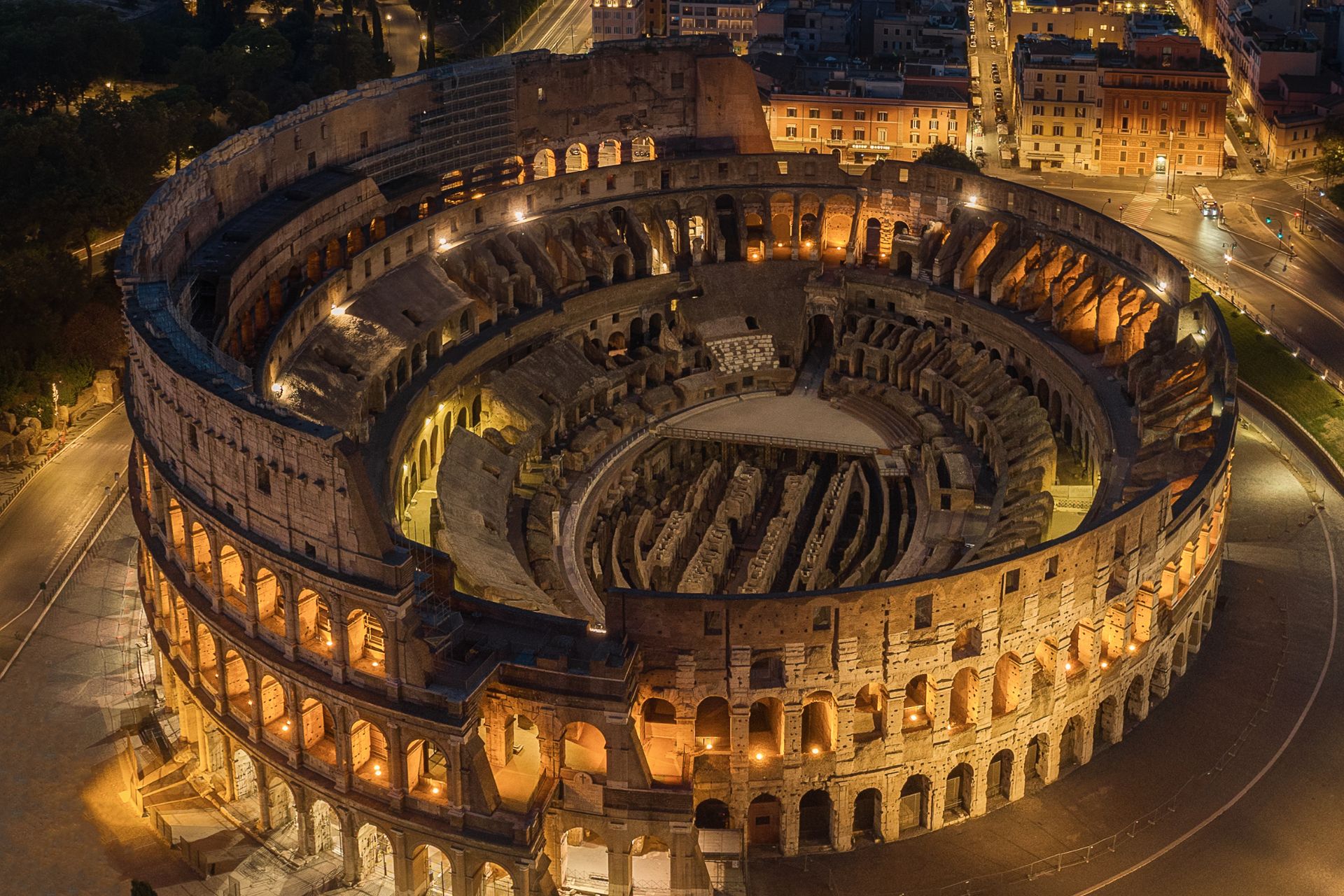
Posing with a costumed performer outside the Colosseum is legal ,they’re independent performers, not museum staff ,but the price is only disclosed after the photo’s taken, sometimes with reinforcements appearing if you hesitate to pay. Agree a price before the sword touches your hand, or decline before anyone hands you anything.
The friendship bracelet
A stranger ties a “free” bracelet on your wrist, then asks for payment, with an uncomfortable follow-up if you refuse. Nothing here is outright fraud, but the tactic is built to create an obligation you never agreed to. Don’t accept anything in the first place.
The rose at dinner
A vendor hands your partner a rose, then looks at you to pay ,guilt as the sales pitch. Decline immediately, before it’s set down on the table.
Real scams near the monuments
Fake “skip-the-line” ticket sellers
Around the Colosseum and Vatican, people who look official offer “exclusive” tickets that are either wildly overpriced or don’t exist. Buy only from a monument’s official site or a verified operator ,never from someone approaching you on the street.
Fake tour guides
A generic plastic pass reading “Official Guide” isn’t proof of anything. Italy’s national tourist-guide law (Legge 190/2023) requires every registered guide to carry a tesserino ,a photo ID with a registration number ,and show it on request. Ask to see it, whether you’re booking independently or through an operator, Crown Tours included.
Unlicensed “my friend” taxis at the airport
Someone offering a ride inside the terminal at Fiumicino or Ciampino isn’t affiliated with the airport, and the fare is invented on the spot. Official Fiumicino-to-central-Rome taxis run a fixed rate ,€55 within the Aurelian Walls as of 2026, per Aeroporti di Roma ,with a separate, lower fixed rate from Ciampino. Walk to the marked white taxi rank outside and confirm the posted rate before you set off.
The shell game
Crowds gather around someone shuffling cups with a ball underneath; the “winners” in the crowd are working with the operator. It’s rigged from start to finish ,never join, never bet.
The floor art trap
Step on a print laid on the cobblestones and the “artist” demands payment for “damaging” a hand-painted piece ,it’s a mass-produced print worth a few euros. Don’t pay; offer to call the police and the act disappears.
The clipboard petition and the badge charity collector
A clipboard petition or a fake charity badge is often just a distraction while a partner works your bag. Legitimate charities don’t solicit cash from tourists on the street. Don’t stop, and donate online if you want to give.
Real scams on transport
Transit pickpockets
On the Metro and around Termini, pickpockets often work in pairs ,one creates a small commotion while the other works your bag. Keep bags zipped and in front of you, especially boarding and leaving trains.
Station ticket machine “assistants”
A stranger “helps” at a touchscreen ticket machine, then asks for your change or takes cash outright. Official staff wear full uniforms and never hover at a machine asking for money ,decline firmly and use a staffed window if needed.
Fake train conductors on the platform
Someone with a badge claims your ticket isn’t validated and offers a “discounted” cash fine, or asks to inspect your card ,really an attempt to see your details. Real conductors check tickets only once the train is moving, never on the platform.
Venice’s baggage “helpers”
Not a Rome scam, but common at Venice’s train station: someone grabs your suitcase to “help,” then demands cash at the top of a bridge. Keep your own grip on your bags.
Real scams if you're driving
The mirror swap
Mostly relevant outside the city, on a self-driven day trip. A thrown object hits your car door, a second car pulls up claiming damage, and someone demands cash to avoid “involving insurance.” Never pay on the spot ,say you’re calling the police.
If it happens to you
Freeze your card through your bank’s app immediately, file a police report (denuncia) at the nearest Polizia di Stato or Carabinieri station for any insurance claim, and contact your embassy if a passport was taken. If someone claiming to be police asks for cash on the street, decline and ask to go to a station instead.
Where a guide actually helps
These patterns cluster around a handful of predictable spots ,monument entrances, airport arrivals, crowded transit. Crown Tours’ guided experiences in Rome run through licensed guides who can be asked for their tesserino the same way any guide should be. Our breakdown of how Colosseum and Vatican tickets actually work covers the official booking side, and the companion video walks through all twenty of these encounters if you’d rather watch than read.
FAQ
A scam involves deception about something real ,a fake ticket, a fake guide, staged damage. A legal quirk, like a cover charge, is disclosed and enforceable even if it’s easy to miss.
Ask to see their tesserino, the personal ID card issued under Italy’s national tourist-guide law, showing a photo, registration number, and ID code. A generic lanyard is not the same thing.
No, as long as it’s printed on the menu before you order. In Rome specifically, a regional law technically bans charging it under the name “coperto,” which is why the same fee often appears as “servizio” instead.
Sources
- Aeroporti di Roma (ADR), “Fiumicino Airport taxi: fares and pick-up points”, accessed September 2026
- Assoturismo Confesercenti, “Guide turistiche: richiesta tesserino, costo e requisiti foto”, on Legge 13 dicembre 2023, n. 190
- Altroconsumo, “Coperto al ristorante: illegale o no? Legge e diritti del consumatore”
- Gambero Rosso, “Lo strano caso del coperto al ristorante”
- Forbes Advisor, “What Is Dynamic Currency Conversion And How To Avoid Paying It”
- NBC News, “When in Venice, please don’t feed the pigeons”
- Crown Tours, companion video: 20 things to watch out for in Italy