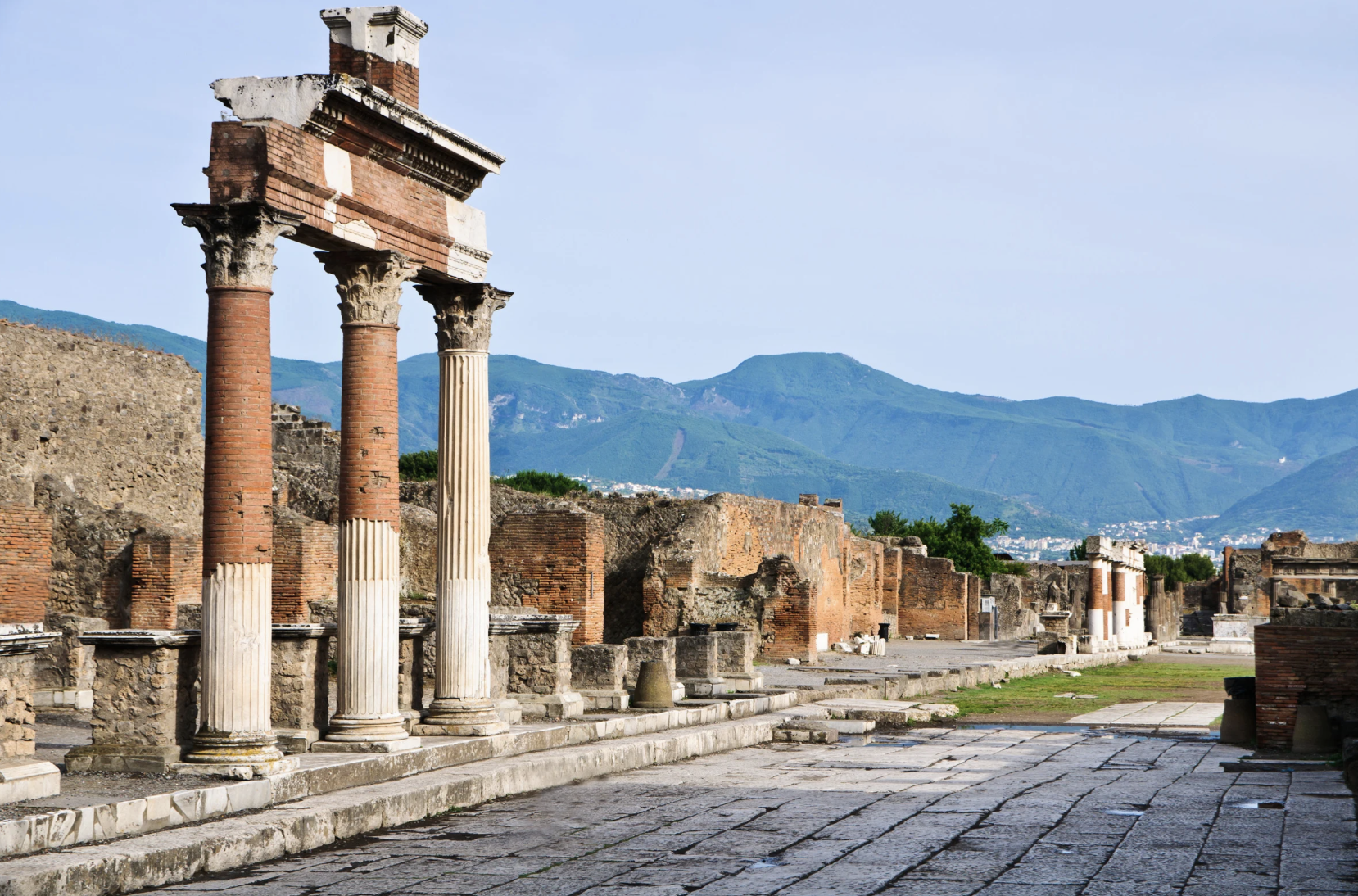
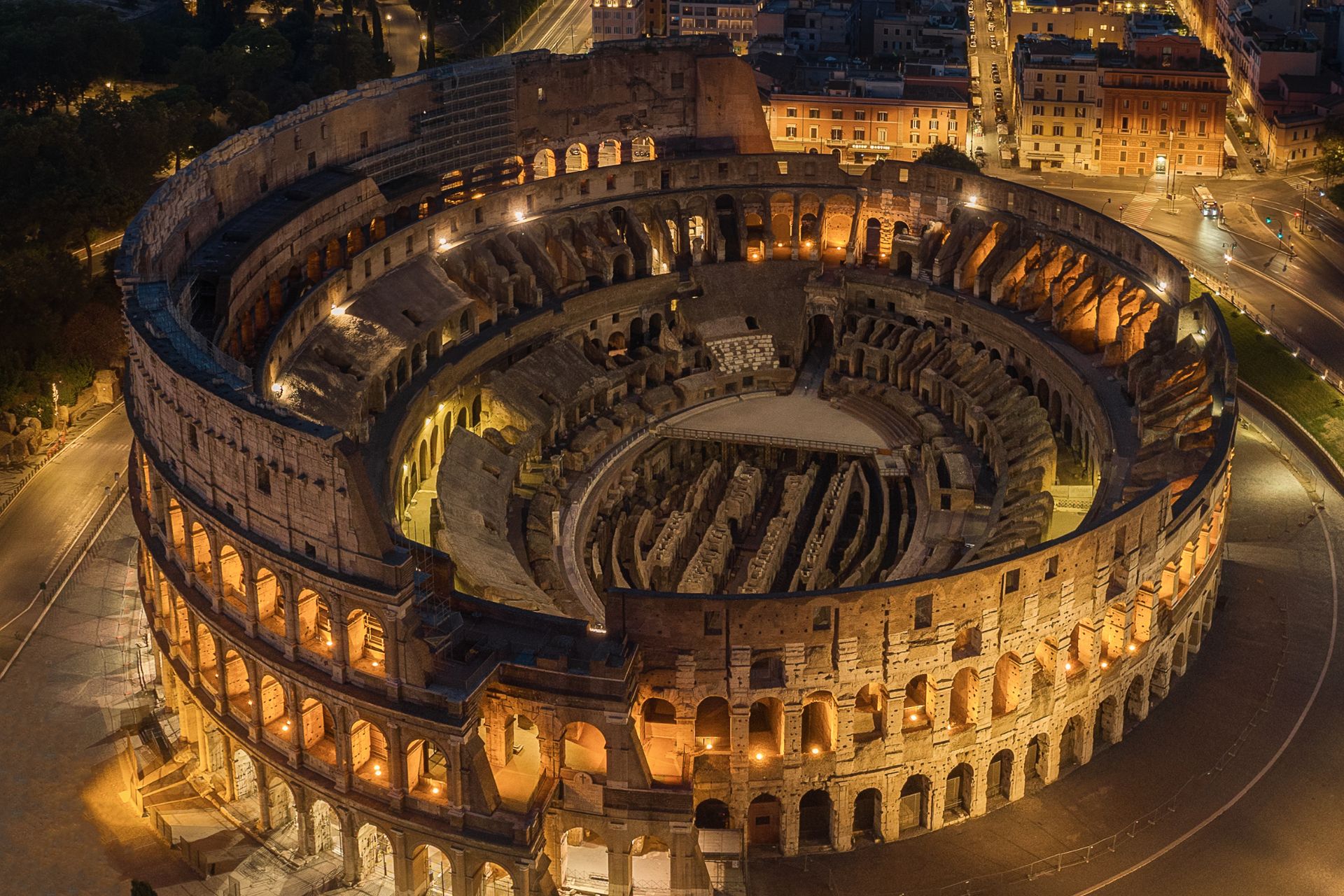
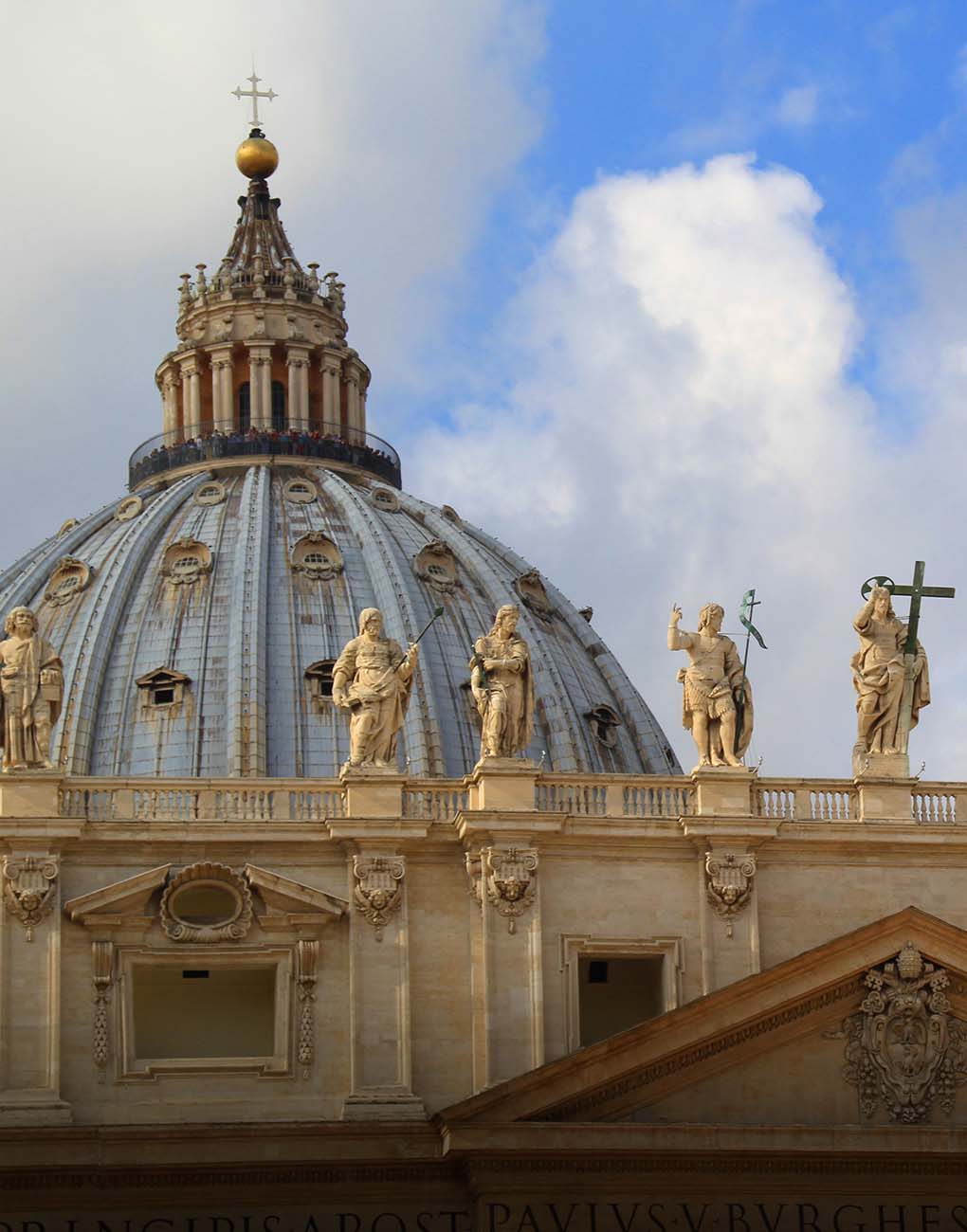
Skip Tivoli if this is your first trip to Rome and you have three days or fewer. Either villa takes a full day out of the city, including travel. On a short first visit, the Forum, Palatine and Vatican come first. Skip Villa d’Este as well if the fountains are off on your only free day and ruins hold no interest for you.
Choose Villa d'Este or Hadrian's Villa: which one fits your trip
Choose Villa d’Este if you are travelling by train, if you have already seen ancient Rome at the Forum and Palatine, and if no fountain works are scheduled for your date. Choose Hadrian’s Villa if ancient Rome is why you came, if you are driving, or if Villa d’Este’s fountains are switched off when you plan to go.
Both villas are in Tivoli, east of Rome, and both are run by the same state body, the Istituto Villa Adriana e Villa d’Este (VILLÆ). They are also UNESCO World Heritage Sites. That is where the similarity ends: they belong to different eras, they are in different parts of town, and they deliver very different days.


Choose Villa d’Este if…
- You are going by train and want to walk from the station, with no second connection.
- You have already covered the Roman Forum and Palatine Hill and want a different era.
- The official news page shows no fountain works for your date.
- The forecast is mixed. The palace interiors give you part of the visit under a roof.
Choose Hadrian’s Villa if…
- Ancient Rome is the main reason you came to Italy.
- Villa d’Este’s fountains are switched off for works on your date.
- You are visiting on a Monday morning, when Villa d’Este does not open until the afternoon.
- You are driving. The official site notes paid parking directly in front of the entrance.
- You want space more than spectacle. About 40 hectares are open to visitors.
Getting to Villa d'Este and Hadrian's Villa from Rome by public transport
Villa d’Este wins on access. According to the VILLÆ official site, trains run from Roma Termini or Roma Tiburtina to Tivoli station, and Villa d’Este is a 10–15 minute signposted walk from there. Hadrian’s Villa is outside the town centre. The same site says that from Tivoli station you need the CAT 4 or CAT 4X local bus.
There is a second route to Hadrian’s Villa. You take Metro line B to Ponte Mammolo and a Cotral regional bus from there, and the official site places the stop about 300 metres from the entrance. Villa d’Este can also be reached by Cotral from Ponte Mammolo: you get off near Piazza Garibaldi and walk a short distance.
The difference is one connection. That matters most on the way back, when you are tired and the timetable decides when you get home. Check the current train and bus timetables on the day, since frequencies change by season and on Sundays.

Villa d'Este's fountains: when they run, and when they are switched off
The fountains are the main reason to visit Villa d’Este, and they are not guaranteed. The VILLÆ official site announces closures for maintenance works in advance on its news page. The site also says the water may be temporarily stopped after heavy rain, when the Aniene river rises. Hadrian’s Villa is unaffected either way.
The fountains are not switched off every winter. When our team visited last autumn, the fountains were dry. The official notice explained why: works to modernise the water treatment plant and improve the lower garden, funded through the national PNRR programme for historic parks and gardens. The fountains were without water from 6 October 2025, and the work was originally scheduled for June and July 2025 before being postponed. In both notices, the Istituto applied a reduced ticket while the fountains were off.
Without water, Villa d’Este is a terraced Renaissance garden and a frescoed palace. It is pleasant, but it is no longer the place UNESCO describes as “a true water garden.” On those dates, Hadrian’s Villa is the stronger choice.
When the fountains are running, the official site says the hydraulic organ in the Fontana dell’Organo plays at set intervals through the day. Check the schedule before you go.

Walking, terrain and weather at the two villas
Villa d’Este is the more compact of the two, but it is not flat. UNESCO describes its gardens as descending two steep slopes towards a flat terrace, arranged like an amphitheatre. Hadrian’s Villa is much larger: the official site says about 40 hectares are open to visitors, mostly outdoors, on paths with changes in level.
On distance, Villa d’Este wins. Everything is within one garden and one building in the town centre. On slopes, neither is easy. VILLÆ recommends comfortable, low-heeled shoes for both sites.
Weather counts for more at Hadrian’s Villa because so little of it is under cover. The official site’s advice is to dress for the season and take care in severe weather. In midsummer heat or steady rain, that matters.
For visitors with limited mobility, both villas have a golf car service under their own rules. The official site publishes an accessible plan for each, and the accessibility office answers questions at va-ve.accessibilita@cultura.gov.it.

What you actually see at Hadrian's Villa and at Villa d'Este
Hadrian’s Villa is a Roman emperor’s retreat, built between 117 and 138 AD. UNESCO describes the remains of about 30 buildings spread across the Tiburtine Hills. Villa d’Este is a 16th-century water garden and palace, laid out by Pirro Ligorio for Cardinal Ippolito II d’Este. Pick the era you came for.
At Hadrian’s Villa, the official site lists residential buildings, baths, nymphaea, pavilions and gardens. A museum, the Mouseia, and a scale model of the complex have their own opening hours. UNESCO notes the villa mixes Egyptian, Greek and Roman architectural traditions. It was rediscovered in 1461, after centuries of neglect, and went on to influence Renaissance and Baroque architects.
At Villa d’Este, the palace was decorated by painters of the late Roman Mannerist school, according to the official site. The garden holds what the same site calls an “impressive concentration of fountains, nymphaea, grottoes, water features and hydraulic music”. Among them are the Hundred Fountains, the Oval Fountain, the Fountain of Neptune with its fishponds, and the Organ Fountain.
The verdict on this criterion follows from what you have already seen. If Rome so far has meant the Colosseum and the Forum, Villa d’Este adds something the city does not have. If you came for ancient Rome and want it with space around it, Hadrian’s Villa wins.


For Rome residents: choosing your date
Residents can choose a date, which removes most of the risk at Villa d’Este. Before going, check the news page on the VILLÆ official site for fountain works. Avoid the days after heavy rain, and avoid Monday mornings, when Villa d’Este opens only in the afternoon. Hadrian’s Villa is open every day.
Both villas are free on the first Sunday of every month, and on 25 April, 2 June and 4 November, according to the official site. Expect larger crowds on those days. Free Entry Days at Italian State Museum
If you plan to come back, the Istituto’s VILLÆ 365 card is a personal annual card. It is valid for twelve months from first use, with unlimited entries to Hadrian’s Villa, Villa d’Este and the Sanctuary of Hercules Victor during normal opening hours. There is a cheaper rate for 18–25-year-olds.
FAQ
Not on a fixed seasonal schedule. The VILLÆ official site announces closures for maintenance works on its news page. In autumn 2025, for example, the fountains were without water while the water treatment plant was upgraded. The water can also be stopped temporarily after heavy rain, when the Aniene river rises. Check before you go.
Yes, but not on foot from the station. The official site says to take the train to Tivoli and then the CAT 4 or CAT 4X local bus. The alternative is Metro line B to Ponte Mammolo and then a Cotral bus, which stops about 300 metres from the entrance. Villa d’Este, by contrast, is walkable from Tivoli station.
Only in the afternoon. According to the VILLÆ official schedule, Villa d’Este is closed on Monday mornings and opens after lunch. When a Monday is a public holiday, the pattern shifts to the following Tuesday. Hadrian’s Villa is open every day. Both close on 1 January and 25 December unless special openings are announced.
Yes. The VILLÆ official site lists free entry to both villas and to the Sanctuary of Hercules Victor on the first Sunday of every month, and on 25 April, 2 June and 4 November. Free days tend to be busier, so arrive early if you go then.
Neither is level. Villa d’Este’s garden descends steep slopes, and Hadrian’s Villa covers about 40 hectares of paths with changes in level. Both sites run a golf car service under their own rules and publish accessible plans on the official site. For specific needs, write to the accessibility office at va-ve.accessibilita@cultura.gov.it before visiting.
Sources
- Istituto Villa Adriana e Villa d’Este (VILLÆ), Ministero della Cultura. “Villa d’Este”. https://villae.cultura.gov.it/i-luoghi/villa-deste/ (accessed 15 October 2026)
- Istituto Villa Adriana e Villa d’Este (VILLÆ), Ministero della Cultura. “Villa Adriana”. https://villae.cultura.gov.it/i-luoghi/villa-adriana/ (accessed 15 October 2026)
- Istituto Villa Adriana e Villa d’Este (VILLÆ), Ministero della Cultura. “Orari e biglietti”. https://villae.cultura.gov.it/orari-e-biglietti/ (accessed 15 October 2026)
- Istituto Villa Adriana e Villa d’Este (VILLÆ), Ministero della Cultura. “Villa d’Este: chiusura delle fontane dal 6 al 23 ottobre 2025”. https://villae.cultura.gov.it/2025/09/18/villa-deste_chiusura-delle-fontane-dal-6-al-23-ottobre-2025/ (accessed 15 October 2026)
- Istituto Villa Adriana e Villa d’Este (VILLÆ), Ministero della Cultura. “Villa d’Este: chiusura delle fontane dal 30 giugno al 17 luglio 2025 (procrastinata)”. https://villae.cultura.gov.it/2025/06/16/villa-deste_chiusura-delle-fontane-dal-30-giugno-al-17-luglio-2025/ (accessed 15 October 2026)
- Istituto Villa Adriana e Villa d’Este (VILLÆ), Ministero della Cultura. “VILLÆ 365 e VILLÆ Pass: i nuovi biglietti per scoprire le VILLÆ di Tivoli”. https://villae.cultura.gov.it/2026/06/23/villae-365-e-villae-pass-i-nuovi-biglietti-per-scoprire-le-villae-di-tivoli/ (accessed 15 October 2026)
- Istituto Villa Adriana e Villa d’Este (VILLÆ), Ministero della Cultura. “Accessibilità”. https://villae.cultura.gov.it/servizi/accessibilita/ (accessed 15 October 2026)
- UNESCO World Heritage Centre. “Villa Adriana (Tivoli)”. https://whc.unesco.org/en/list/907/ (accessed 15 October 2026)
- UNESCO World Heritage Centre. “Villa d’Este, Tivoli”. https://whc.unesco.org/en/list/1025/ (accessed 15 October 2026)