Yes, if you want to walk inside it. Trajan’s Forum is part of the Imperial Fora, and entry requires either the standalone ticket at Trajan’s Markets near Trajan’s Column or the Forum Pass SUPER. The standard Colosseum, Roman Forum and Palatine ticket doesn’t cover it.
The Roman Forum and Palatine Hill sit inside the same archaeological park, on the same ticket, one directly above the other. The Imperial Fora is a separate, later complex of forums split by the modern street Via dei Fori Imperiali, mostly free to see, with its own paid ticket for the parts you can’t view from the sidewalk. Same word in every name, three different visits.
| Site
|
What it actually is
|
What it is not
|
| Roman Forum
|
The excavated valley of temples, courts and the Senate house that was Rome’s civic center for over a thousand years. Included on the standard Colosseum ticket.
|
Not the hill above it, and not the forums built centuries later along the modern boulevard.
|
| Palatine Hill
|
The hill rising directly over the Roman Forum, covered in the ruins of imperial palaces and gardens. Same ticket, same archaeological park, connected by internal paths.
|
Not a separate purchase, and not the same ground-level walk as the Forum valley below.
|
| Imperial Fora
|
Five later forums, each built by a different emperor, now divided by Via dei Fori Imperiali. Largely viewable for free from the street.
|
Not included on the standard Colosseum ticket, and not the same site as the Roman Forum despite the shared name.
|
The Roman Forum
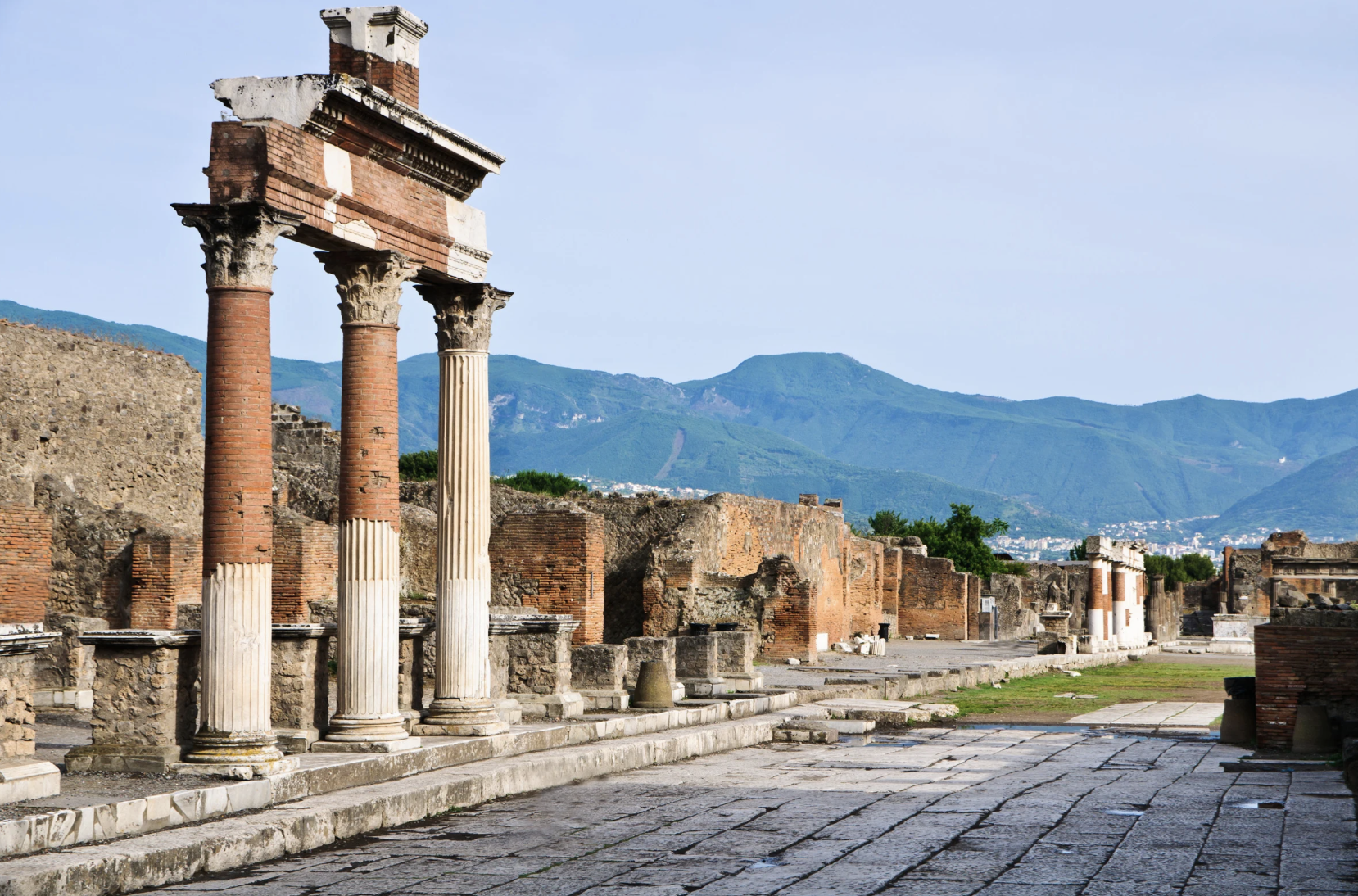
The Roman Forum is the excavated valley between the Palatine and Capitoline hills that functioned as Rome’s political, legal and religious center for more than a thousand years. It holds the ruins of temples, basilicas and the Senate house, and it sits on the same ticket as the Colosseum and Palatine Hill.
Entrances are shared with the Palatine: Largo della Salara Vecchia, the Arch of Titus on Via Sacra, Via di San Gregorio, and the Mamertine Prison gate, according to Rome’s official tourism site, Turismo Roma. Inside, the landmarks that anchor most visits are the Arch of Titus, the Curia Iulia (the actual Senate meeting hall), the Temple of Antoninus and Faustina, the Basilica of Maxentius, and the House of the Vestal Virgins.
Crown Tours guides note that no standard guided visit covers the whole site, the Forum is simply too large to walk end to end and still leave time for the Palatine and the Colosseum on the same ticket window, so a guided route picks the landmarks that make the layout legible rather than attempting a full circuit.

Palatine Hill
Palatine Hill is the hill directly above the Roman Forum, traditionally cited as the site of Rome’s founding and later covered in the palaces of the emperors who ruled from it. It shares a ticket and an entrance system with the Roman Forum, but it is a physically separate, uphill visit.
What’s there: the Domus Augustana, the House of Augustus, the House of Livia, and the Farnese Gardens, plus views down over the Circus Maximus that the Forum floor doesn’t offer. It suits visitors who have the time and the legs for a climb and want the emperor’s-eye view of the city rather than another dense stretch of ruins at ground level; the paths are less crowded than the Forum valley, but steeper and less shaded.

The Imperial Fora
The Imperial Fora is not part of the Roman Forum. It’s a separate complex of five forums that Julius Caesar, Augustus, Vespasian, Nerva and Trajan added to the city center over roughly a century and a half, now divided down the middle by the modern boulevard Via dei Fori Imperiali.
That road didn’t skirt the ruins, it was cut straight through them. Turismo Roma describes the area as having been almost completely excavated and then partly built over in the early twentieth century to create the road, which runs in a straight line from Piazza Venezia to the Colosseum. The practical result: most of the Imperial Fora is visible for free from the elevated sidewalk along that street, looking down into the excavated squares on either side.
Walking down into the ruins is a different matter. There are two ways in: a standalone ticket at the Museum of the Imperial Fora inside Trajan’s Markets, with its own entrance near Trajan’s Column (a separate site from the Colosseum park entirely) or the Forum Pass SUPER, whose route crosses under Via dei Fori Imperiali and connects the excavated Forum of Trajan and Forum of Caesar directly to the Roman Forum on one continuous path, per Turismo Roma. The standard Colosseum, Roman Forum and Palatine ticket includes neither.
Crown Tours guides say most first-time visitors experience the Imperial Fora exactly this way from the sidewalk, on the walk between Piazza Venezia and the Colosseum without realizing that’s the standard way to see it, not a consolation prize for skipping a ticket.

How to Tell Which One You Booked
Check the ticket name first. “Colosseum, Roman Forum and Palatine” doesn’t include the Imperial Fora. “Forum Pass SUPER” does, and doesn’t include the Colosseum. A ticket bought separately at Trajan’s Markets or the Museum of the Imperial Fora is a different site altogether, with no access to the Roman Forum or Palatine.
Then check the entrance named on your confirmation. Largo della Salara Vecchia, Via di San Gregorio, or the Arch of Titus point to the Roman Forum–Palatine. Piazza Santa Maria di Loreto or the ticket office near Trajan’s Column point to the Imperial Fora.
FAQ
Yes. Most of the excavated squares are visible for free from the elevated sidewalk along Via dei Fori Imperiali, between Piazza Venezia and the Colosseum. What you can’t do without a ticket is walk down into the ruins themselves.
Yes. The standard Colosseum ticket also covers the Roman Forum and Palatine Hill within the same visit window, in whichever order you choose to see them. It’s one ticket for all three areas of the archaeological park.
Via dei Fori Imperiali was cut through the site in the early twentieth century, when the area was excavated and then partly built over to create a straight route from Piazza Venezia to the Colosseum, according to Turismo Roma. That’s why the fora appear as separated fragments today rather than one continuous excavated area.
The Roman Forum. It served as Rome’s civic center for centuries before Julius Caesar began building the first of the Imperial Fora nearby in the first century BC, a project later emperors continued for roughly 150 years as the old Forum ran out of room.
Sources
Sources
- Turismo Roma, “Archaeological area of the Imperial Fora”, accessed September 2026
- Turismo Roma, “Forum Pass Super ticket – Roman Forum-Palatine and Imperial Fora”, accessed September 2026
- Turismo Roma, “The Roman Forum and the Palatine”, accessed September 2026
- Turismo Roma, “Via dei Fori Imperiali”, accessed September 2026
- Parco Archeologico del Colosseo, “Opening Times and tickets”, accessed September 2026
Published September 1, 2026. Last verified September 1, 2026. Sepehr K. Yekta, Customer Experience Team, Crown Tours.